(1).jpeg)
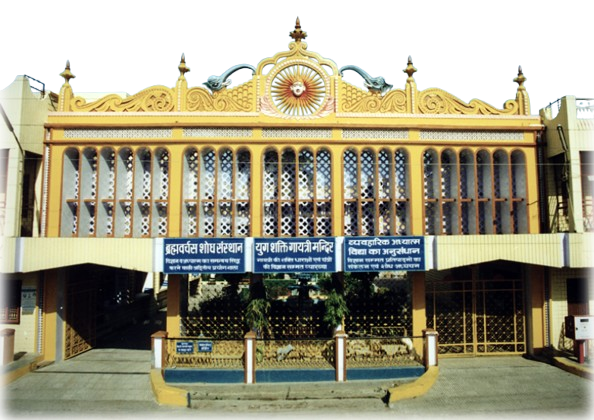
Brahmvarchas Shodha Sansthan”, the research centre of Shantikunj, Haridwar was established by Pt. Shriram Sharma Acharya in 1979. It is situated at the Saptsarover road about 5 kilometers away from the Haridwar station in the direction of Rishikesh beneath the Himalayan range in India .
Distinctive features
This centre is dedicated to the integration of the modern and ancient sciences in a practical way motivated by the noble goal of health and happiness for all. Innovative scientific research aimed at grass root applications is being carried out here in the ancient sciences in an enliven collaboration with the relevant modern sciences. Major areas of research include – Ayurveda and Yagyopathy, Total Psychology, The Science of Mantra and its Therapeutic Applications, The Philosophy and Science of Yoga, Sadhana, Mantra and Tantra and the Science of Spirituality, etc.
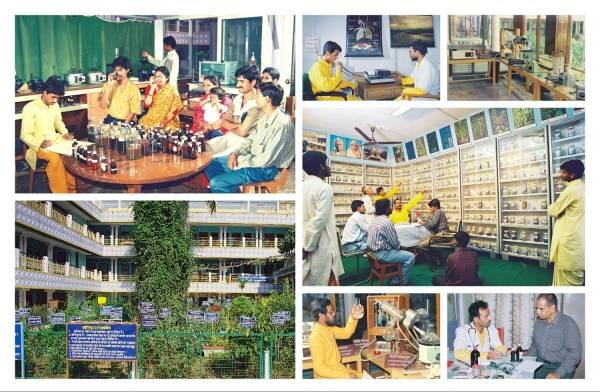
This center houses well equipped laboratories of Hematology, Biochemistry, Neurophysiology, Cardiology, Phytochemistry, Psychometry, Yagyopathy etc. Apart from its own team of doctors, engineers, scientists and philosophers, the center has live interaction with the Hospital, Ayurvedic Pharmacy and Yoga Labs of Shantikunj and with some of the Hospitals and Universities in and around Haridwar . Distinguished researchers, professors and other experts also visit the center regularly.
It has a rare collection of Himalayan herbs and medicinal samples prepared from the same after thorough experimental research. Several of the Ayurvedic medicines prepared here are in great demand as these have been found effective in the treatment of some otherwise incurable or advanced stage diseases.

Research
Research studies of tens of Ph.D. degrees awarded from different universities in India have been carried out here and larger nos. are currently ongoing. The topics range from “Vedic Cosmology”, “Review of the multiple dimensions of Vedic Culture” to “The Effects of Japa, Pranayam, Shavasana and Yagya on Human Physiology”….
Areas of Research
Cardiology Chamber
Neurology
Bio-Chemistry Laboratory
Haematology Chambe
Electrophysiology Chamber
Pulmonary Chamber
Psychosomatic Chamber
Experiments on Psychomatic Disorders
One month Gayatri Yagna (with specific herbal preparations) experiments were carried out at the centre upon about 30 to 40 males and about the same numbers of females suffering from Anxiety/Depression/Guilt/Insomnia. The control groups consisted of about ten subjects in each category.
The statistical analysis of the results (on psychological tests for measure of the extent of above diseases/disorders) showed significant improvement in the experimental group. Some Ph.D. projects (in the Dev Sanskriti University of Shantikunj, Haridwar ) are currently ongoing for further studies in this regard.
Experiments on Environmental Purification and on Tuberculosis
Two Ph. D. projects have been completed in Dev Sanskrati VishwaVidyalya (DSVV). These are entitled
“Air Quality Modelling and Non-conventional Solutions through Vedic Science for Environment Problem”
“Some Investigations into the Chemical and Pharmaceutical Aspects of Yagyopathy – Studies in Pulmonary Tuberculosis”.
Experimental work of both the projects is being carried out at the Brahmvarchas Shodh Sansthan, Haridwar . Experts (member-secretary) from the central pollution control board and Professors from the Bioscience and Bioengineering Department of Indian Institute of Technology Bombay, are associated with these research projects as external co-guides.
Brahmavarchas Shodh Sansthan
Research on Effects of Gayatri Sadhana
About three thousands five hundred observations on different Clinical features, Lung-functions and Biochemical, Haemetological, Electrophysiological, Neurological and Psychometric parameters of the trainees of the one month sadhana course programmes were selected randomly (from the database of the experiments conducted since 1992) for the statistical analysis.
Observations on 22 features were collected before and after the sadhana course (anushthan) in the laboratories of the Brahms Varchas Shodh Sansthan. These were subdivided into 10 different data sets with respect to Sex and Age Group. Optimal statistical designs were constructed for the random samples drawn from each group.

Yagyopathy Research
The yagnopathy laboratory has a havan kunda places in a glass chamber and a gas analysis wing for the collection and analysis of the fumes and vapours of yagna. The efficacy of the various herbal ingredients in the havishya and the quality of the samidhas are assessed in the phytochemistry lab which is equipped with units like the gas-liquid chromatograph. The purpose is to analyse the raw content in the beginning and what is left after these substances have been fumigated.
Blood samples are kept in the glass chamber when it is full of fumes and vapours during the daily yagna (havan) and the changes in the blood biochemistry and heamotological parameters are recorded for these samples. A large number of experiments are carried out on healthy and diseased persons, living on the campus for prescribed periods. The subjects include the sadhakas as well as the non sadhakas of all age groups, men and women from all walks of life disregard of their social or religious background. During such experiments the subjects are asked to sit in the glass chamber and inhale the fumes of Yagna for specific periods of time. A thorough analysis of their body and mind is made before and after performing this experiment.
The measurements (carried out by chromatographs, multi channel physiographs, etc) of the above experiments include:
Haematological parameters like Hb, TRBC, TWBC, platelets, RBC fragility, etc
Biochemical changes like thos ein the levels of blodd urea, sugar, cholestrol, cretinine, SGOT, SGOT, etc
Immunological changes like the antibody levels and innate immunity towards various pathogenic offending organisms.
The levels of hormones like cortisol, thyroxine, ACTH, androgens, etc are recorded in the endocrinology lab. The EEG, EMG and ECG recordings are carried out in the neuro-physiology labs. The psychometry lab assesses the aptitude, learning potential, memory, the intelligence quotient, emotional quotient and the overall personality makeup of the subjects. The cases are followed on regular intervals (e.g. after performing yagna regularly for a week, or a month, etc.)
The technical details and results of this experimental research will be published subsequently in the relevant scientific journals to give directions for therapeutic use of different herbal medicines by means of yagna and further research on herbal medicine and to establish progressive ground for other scientific applications of yagna.
The general implications of the results obtained so far is that performing yagna significantly enhances the vitality and resistance against adverse metero-biological changes and against the invasion of otherwise lethal viruses and bacteria. Mental peace, emotional stability and creative development of the mind are the general observations of the analysis on the psychological fronts.